What Is Moisture Vapor Transmission in Concrete Floors?
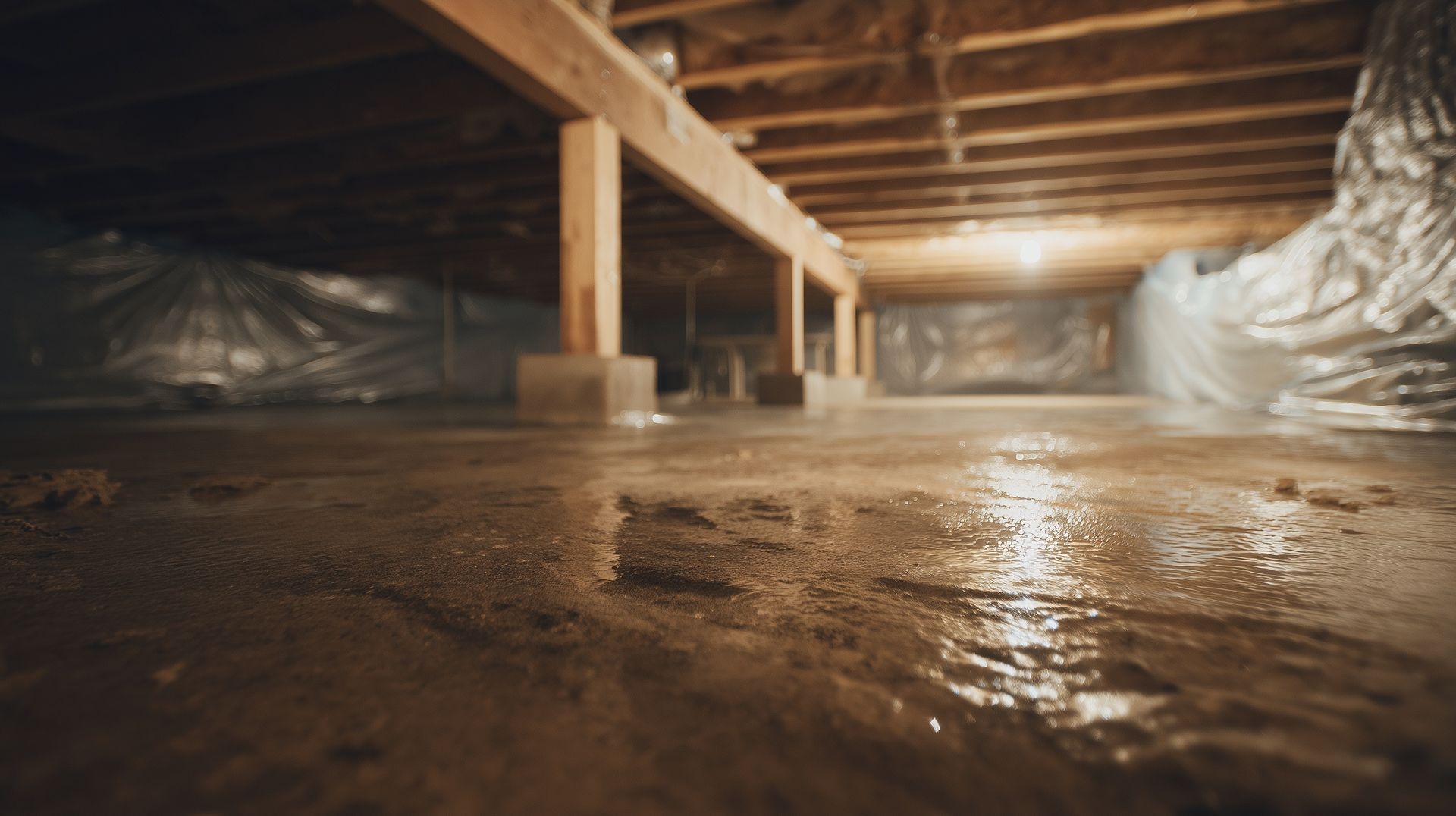
It is one of the most common causes of concrete coating failure and one of the least understood by homeowners who experience it. When Keas Concrete Coatings evaluates a failed basement or garage floor coating, moisture vapor transmission is the diagnosis more often than any other single cause. The coating peels, the homeowner assumes the product was defective, or the installer made a mistake, and the replacement coating fails for exactly the same reason because the underlying cause was never identified or addressed.
Understanding what moisture vapor transmission actually is, why it causes coatings to fail, how professionals test for it, and what can be done to prevent coating failure in moisture-affected slabs gives Colorado homeowners the technical foundation to make smarter decisions about floor coating projects and to ask the right questions before any coating goes down.
What Moisture Vapor Transmission Actually Is
Moisture vapor transmission, often abbreviated as MVT, is the movement of water vapor through a concrete slab from an area of higher moisture concentration to an area of lower moisture concentration. It is not the same as a leaking slab or standing water beneath a floor. It is a continuous, invisible process driven by the physics of vapor pressure differential that occurs in virtually every concrete slab to some degree.
Concrete is a porous material. The cement paste matrix that binds aggregate together contains a network of capillary pores that form during the hydration process and persist in the hardened concrete throughout its service life. These pores provide a pathway through which moisture vapor can migrate from the soil beneath the slab, through the concrete thickness, and out through the surface above.
The driving force behind this migration is the vapor pressure differential. When the moisture content of the soil beneath a slab is higher than the moisture content of the air above the slab, vapor pressure pushes moisture from the high-concentration side toward the low-concentration side, which means upward through the concrete. In a basement or below-grade slab in Colorado, this condition exists for much of the year because subsurface soil moisture levels remain elevated relative to the controlled interior environment above the slab.
When the concrete surface is open and uncoated, moisture vapor exits the slab freely and enters the room air, where it is managed by ventilation or dehumidification. When a coating is applied to the concrete surface, it interrupts this free vapor exit. If the coating is not permeable enough to allow vapor to pass through it, vapor pressure builds between the coating and the concrete surface. When that pressure exceeds the adhesive bond strength of the coating, the coating lifts from the concrete surface in the characteristic blistering and delamination that homeowners recognize as coating failure. Why choose polyurea over epoxy for your basement addresses the material selection implications of moisture vapor transmission for below-grade coating applications.
Why Colorado Conditions Make MVT a Particularly Common Problem
Moisture vapor transmission affects concrete slabs everywhere, but Colorado's specific climate and soil conditions create a pattern of MVT-related coating failures that is worth understanding in the regional context.
Colorado's Front Range communities sit on predominantly clay-heavy soils that retain moisture effectively and release it slowly. Clay soils that absorb moisture during spring snowmelt and rainfall maintain elevated subsurface moisture levels through much of the summer even as surface conditions appear dry. The concrete slabs in contact with these soils experience persistent moisture vapor pressure from below throughout the wet season and into the dry season as the retained soil moisture gradually equilibrates.
The elevation factor compounds the problem. Colorado's dry climate and low relative humidity create a consistently lower moisture level in the interior air above basement slabs compared to the subsurface moisture levels below them. This large vapor pressure differential between the soil side and the interior side of a basement slab drives moisture vapor transmission at higher rates than would occur in more humid climates, where the differential between subsurface and interior moisture is smaller.
Seasonal variation in Colorado creates conditions where a slab tested during the dry summer months may show acceptable moisture vapor emission rates, but the same slab tested during spring snowmelt or after significant fall rainfall would show substantially higher rates. A coating installed during the favorable dry season can face moisture pressure well above its tolerance threshold when wet season conditions arrive, which is why testing at a single point in time without accounting for seasonal variation can give a misleadingly optimistic picture of the moisture challenge a coating will face over its service life. Best basement floor coatings for moisture problems covers the coating system selection implications of Colorado's specific moisture conditions for below-grade applications.
How Professionals Test for Moisture Vapor Transmission
Accurate moisture testing before coating application is the professional standard that separates coating projects that perform from those that fail, and understanding the testing methods helps homeowners evaluate whether a contractor's assessment process is adequate.
The Calcium Chloride Test
The calcium chloride test, formally specified in ASTM F1869, measures the rate of moisture vapor emission from the concrete surface over a 60 to 72-hour period. The test is performed by placing a measured quantity of anhydrous calcium chloride in a sealed dish on the cleaned concrete surface and covering it with a plastic dome that creates a sealed test chamber. After the specified time period, the calcium chloride is weighed again. The weight gain, caused by moisture absorbed from the vapor emitted from the slab surface, is used to calculate the moisture vapor emission rate in pounds per 1,000 square feet per 24 hours.
Most coating manufacturers specify maximum acceptable emission rates for their products, typically in the range of three to five pounds per 1,000 square feet per 24 hours for standard systems. Emission rates above the manufacturer's specified threshold indicate that the standard coating system will be at risk of moisture-related failure and that additional moisture mitigation or a specifically formulated moisture-tolerant system is required.
The calcium chloride test measures what is currently emitting from the surface at the time of testing, which makes it sensitive to recent weather conditions and seasonal moisture levels. Testing during a dry period may produce results that do not represent the moisture conditions the coating will face during wet season conditions, which is a limitation worth understanding when interpreting test results.
The Relative Humidity Probe Test
The relative humidity probe test, specified in ASTM F2170, measures the relative humidity within the concrete slab itself by drilling holes to a depth of 40 percent of the slab thickness and inserting calibrated relative humidity probes. After an equilibration period that allows the probe readings to stabilize, the in-slab relative humidity is measured and recorded.
This method provides a more comprehensive picture of the moisture condition within the slab than the surface emission test because it measures where the moisture reservoir actually is rather than what is currently emitting from the surface. A slab with high in-slab relative humidity may show moderate surface emission during dry conditions, but will emit at much higher rates when the vapor pressure differential increases during wet conditions.
Most coating systems specify maximum acceptable in-slab relative humidity values, typically in the range of 75 to 85 percent relative humidity. In-slab readings above these thresholds indicate elevated moisture conditions that require mitigation before standard coating systems can be applied with confidence in their long-term performance.
The Plastic Sheet Test
The plastic sheet test, specified in ASTM D4263, is a simple qualitative screening test that provides an indication of whether significant moisture is present without quantifying the emission rate or in-slab humidity. A square of plastic sheeting is taped to the concrete surface and left in place for 16 to 24 hours. If moisture condensation appears on the underside of the plastic or the concrete surface beneath it appears darker after the test period, significant moisture vapor transmission is present.
The plastic sheet test is appropriate as a screening tool to identify whether more rigorous quantitative testing is needed, but it does not provide the quantitative data required to select a specific coating system or moisture mitigation approach. A positive result from the plastic sheet test should always be followed by quantitative testing before coating decisions are made. Our process for concrete coating installation covers the assessment standards that professional installation requires, including moisture evaluation before any coating system is specified.
What Happens When MVT Is Ignored
The failure progression for a coating applied over concrete with unaddressed moisture vapor transmission follows a consistent pattern that helps homeowners recognize what they are looking at when problems develop.
In the early stages, small bubbles or blisters appear in the coating surface, typically starting at the lowest points of the floor where moisture pressure concentrates or near expansion joints and cracks where vapor finds easier pathways through the slab. These blisters are caused by vapor pressure accumulating between the coating and the concrete and pushing the coating away from the surface locally.
As the moisture pressure continues and the coating adhesion fails progressively, the blisters grow and coalesce into larger areas of delamination. The coating begins to lift in sheets, particularly in areas with the highest moisture vapor emission. The concrete surface beneath the failed coating is often visibly damp and may show efflorescence deposits from mineral salts carried to the surface by the migrating moisture.
In advanced failure, the coating has separated from most of the floor surface, and the concrete is essentially uncoated again, often in worse condition than before coating, because the moisture that was previously exiting freely is now exiting at the edges and joints of the delaminated coating in concentrated flows.
The cost of addressing a failed coating, including removal of the failed system, surface preparation, moisture testing, and new coating application, substantially exceeds the cost of having done the testing and appropriate system selection before the original installation. Common mistakes with DIY garage coatings covers the installation errors that produce coating failures across residential applications, and inadequate moisture assessment is among the most consistently consequential.
How Professionals Address MVT Before Coating
When moisture testing reveals vapor emission rates or in-slab humidity levels that exceed the tolerance of standard coating systems, professional installers have several technical approaches available depending on the severity of the moisture condition.
Moisture-tolerant primer systems are formulated to maintain adhesion at moisture vapor emission rates above the threshold for standard primers. They use modified chemistry that bonds effectively to damp concrete and creates a base layer that standard topcoat systems can adhere to even when applied over concrete with elevated moisture content. For moderate moisture conditions that exceed standard system tolerances but fall within the moisture-tolerant product's specified range, these primers provide a practical solution without more extensive intervention.
Vapor barrier coating systems are designed to significantly reduce moisture vapor transmission through the slab by creating a membrane at the concrete surface that moisture vapor cannot easily penetrate. These systems typically use high-build epoxy formulations applied at thicknesses that create an effective vapor barrier rather than simply a coating layer. The vapor barrier reduces the moisture vapor reaching the decorative topcoat above it to levels within the topcoat's tolerance range, allowing standard decorative systems to perform durably over a moisture-affected slab.
For basement slabs with severe moisture conditions or active hydrostatic pressure, surface-applied vapor barriers may not be sufficient, and more comprehensive waterproofing interventions, including interior drainage systems, perimeter drain tiles, or exterior waterproofing, may be appropriate. The professional assessment that determines which approach is right for a specific situation depends on accurate moisture testing data and evaluation of the drainage conditions around the foundation. Enhancing commercial spaces with durable concrete coatings covers the moisture management considerations that apply in commercial below-grade applications where the consequences of coating failure are equally significant.
The Connection Between MVT and New Construction
Moisture vapor transmission is not only a problem in older homes with existing concrete. New construction concrete slabs contain significant moisture from the water used in the concrete mix and require adequate cure time before coating applications will perform as designed.
Freshly poured concrete contains far more moisture than it will after full curing, and the moisture vapor emission rate from new concrete is substantially higher in the weeks and months following placement than it will be after the concrete has had adequate time to cure and dry. Most coating manufacturers specify minimum cure times for new concrete before application, typically 28 days at a minimum, and even after 28 days the in-slab moisture content may exceed acceptable levels for coating in many conditions.
Testing new construction concrete before coating application is as important as testing existing concrete. The assumption that new concrete is dry because it looks and feels dry at the surface is a common misunderstanding that leads to premature coating failures in new homes. Surface appearance is not a reliable indicator of in-slab moisture content, and professional testing before coating application is the only way to confirm that moisture conditions are within acceptable limits for the intended coating system. Fast and durable flooring for real estate investors covers the coating timeline and performance considerations that apply when new construction or renovation schedules create pressure to coat concrete before it has fully cured and dried.
Frequently Asked Questions About Moisture Vapor Transmission in Concrete Floors
Can I test for moisture vapor transmission myself before calling a professional?
The plastic sheet test described above is a simple qualitative screening test that homeowners can perform without specialized equipment. Taping a piece of plastic sheeting to the concrete surface and leaving it for 16 to 24 hours reveals whether significant moisture is present. If condensation appears on the underside of the plastic or the concrete beneath appears darker, moisture vapor transmission is occurring at a level that warrants professional quantitative testing before any coating is applied. The plastic sheet test does not provide the quantitative data needed to select a coating system or mitigation approach, but it is a useful first step for homeowners who want to assess their situation before engaging a professional.
Does moisture vapor transmission mean my basement has a waterproofing problem?
Not necessarily. Moisture vapor transmission is a normal characteristic of concrete slabs in contact with soil, and its presence does not automatically indicate a waterproofing deficiency or structural problem. The question is whether the rate of transmission exceeds the tolerance of the coating system being considered. Low to moderate vapor emission rates that fall within the specified tolerance of an appropriate coating system do not require waterproofing intervention. High emission rates that exceed coating system tolerances may indicate drainage or waterproofing conditions that warrant evaluation, but the first step is accurate measurement rather than assuming the worst based on the presence of vapor transmission alone.
Why did my previous basement coating last several years before failing from moisture?
Coating failures from moisture vapor transmission often take time to develop because the adhesion bond of the coating gradually fatigues under the cycling vapor pressure rather than failing immediately. A coating applied in dry conditions may adhere well initially and perform adequately through one or two seasonal wet cycles before the cumulative effect of repeated vapor pressure cycling overcomes the coating's adhesion, and failure begins. The longer service life before failure reflects the coating's initial adhesion strength rather than the absence of a moisture problem. The same moisture condition that eventually caused the failure was present from the beginning and will affect any replacement coating the same way if not addressed. The long-term benefits of choosing Keas Concrete Coatings covers the durability differences between properly specified and installed coating systems versus those that are inadequately matched to their application conditions.
How do I find a contractor who properly tests for moisture vapor transmission before coating?
Ask specifically whether the contractor performs moisture testing before coating application and which test methods they use. A contractor who answers with a description of the calcium chloride test or relative humidity probe test and explains how the results inform their coating system selection is demonstrating the professional standard. A contractor who says they will just use a good quality coating or that moisture is not a problem in your area is not applying the professional standard that moisture-affected slabs require. The cost of proper moisture testing is modest relative to the total project cost, and a contractor who skips it to reduce upfront cost is creating risk that the homeowner will bear if the coating fails.
Can adding a dehumidifier to the basement reduce moisture vapor transmission enough to allow standard coating?
A dehumidifier reduces the relative humidity of the basement air above the slab, which reduces the vapor pressure differential driving moisture upward through the concrete. In cases where the moisture vapor emission rate is moderately elevated, reducing the interior humidity through dehumidification can lower emission rates enough to bring them within standard coating system tolerances. However, dehumidification addresses the vapor pressure differential from above rather than the moisture source from below, and its effectiveness depends on maintaining consistent dehumidification operation year-round. A coating whose performance depends on a dehumidifier operating continuously is at risk whenever that dehumidifier is not operating, which is a fragile dependency for a floor coating expected to perform for a decade or more.
What should I tell a contractor to make sure they properly assess my basement for moisture before coating?
Tell the contractor you want quantitative moisture testing performed before any coating system is selected or applied, and ask them to explain what test methods they use and how the results will inform their coating system recommendation. Ask specifically whether they test for both surface vapor emission rate and in-slab relative humidity, as both provide relevant information for coating system selection. Ask what happens if the test results exceed standard coating system tolerances and what moisture mitigation options they recommend in that scenario. A contractor who engages seriously with these questions and provides specific technical answers is applying the professional standard. How to choose the right concrete coating for your space covers the evaluation criteria that help homeowners identify contractors who approach coating projects with the technical rigor the application requires.
Get the Assessment Right Before the Coating Goes Down
Moisture vapor transmission is preventable as a cause of coating failure when it is properly tested for and addressed before installation. Contact Keas Concrete Coatings for a free quote. Denver: 303-999-8121. Colorado Springs: 719-432-6490. Or
request a quote online.