Moisture Vapor and Slab Testing: The Step Most Failed Basement Coatings Skipped
A concrete slab can look dry, feel dry, and still be pushing enough water vapor through its surface to lift a coating off it.
That is the uncomfortable part of basement and garage floor work, and it is the reason a floor that passed every visual check can bubble, cloud, or delaminate months after a flawless install. Moisture does not announce itself. It has to be measured.
This guide from Keas Concrete Coatings covers how that measurement works and what to ask before anyone coats your slab.
Concrete is a sponge with a schedule
Concrete is porous by nature. Water moves through it as vapor, driven by differences in humidity and temperature between the soil below and the room above. Below grade, the soil side stays damp year-round, and the room side is conditioned and dry, so vapor moves steadily upward. That flow continues for the life of the building.
A coating changes the equation. Once you seal the top of the slab, vapor that used to evaporate freely now arrives at a barrier. If the rate is higher than the coating system can tolerate, pressure builds at the bond line, and the coating loses adhesion. The visible results are blisters, milky or cloudy patches, edge lifting, and, in the worst cases, sheets releasing cleanly with a chalky white residue on the back.
None of that means the coating was defective. It usually means nobody measured what the slab was doing before they covered it.
Why a dry-looking slab is not evidence
Surface dryness tells you about the top few millimeters, which are exposed to room air and dry quickly. It says nothing about the moisture gradient through the rest of the slab or about vapor arriving from underneath.
The plastic sheet trick, taping a square of poly to the floor overnight and checking for condensation, is better than nothing and worse than most people believe. It is a rough indicator, sensitive to room conditions, tape quality, and the weather that week. It produces no number, so it cannot be compared against a manufacturer’s limit. Treat it as a reason to test properly, never as a substitute for doing so.
The two tests that produce a number
Two standardized methods dominate the industry, and they measure different things.
ASTM F1869: the calcium chloride test
This method measures moisture vapor emission rate, the amount of moisture leaving the surface of the slab over a set period. A dish of dried calcium chloride is weighed, sealed under a dome on a clean, prepared section of floor, left in place for the specified test period, then weighed again. The weight gained becomes a rate, reported in pounds of moisture per 1,000 square feet per 24 hours.
The conditions around the test matter as much as the test. The space has to be at normal service temperature and humidity before and during the measurement, and the test area has to be prepared the way the floor will be prepared. Running a calcium chloride test in an unconditioned basement in February and treating the result as typical is a way to get a number that means nothing.
ASTM F2170: in situ relative humidity probes
This method measures relative humidity inside the slab rather than emissions at its surface. Holes are drilled to a specified depth, sleeves are installed, the holes equilibrate for the period the standard requires, and probes then report the humidity within the concrete itself.
Most of the industry now treats in situ relative humidity as the more reliable picture, because it reads the condition of the slab as a whole rather than surface behavior on the day of the test. It is less sensitive to what the room was doing that week and it is harder to accidentally game.
The number that matters is not on the standard; it is on the data sheet
Here is the part that gets misquoted constantly. ASTM F1869 and ASTM F2170 are test methods. They define how to measure, not what is acceptable. The acceptable limit comes from the manufacturer of the coating or adhesive being installed, and it is published on that product’s technical data sheet.
Limits vary by system. Some coatings tolerate considerably more vapor drive than others, and some manufacturers offer a moisture mitigation primer that raises the ceiling when a slab tests high. So the right question to a contractor is never a generic one. It is this: what does the data sheet for the system you are installing on my floor allow, what did my slab test at, and where is that in writing?
If a slab tests above the limit, the honest paths are mitigation with a system designed for it, or not coating the floor. Proceeding anyway and hoping is not a path, although it is a common one.
Front Range conditions that raise the risk
Colorado is dry, which makes people assume moisture is a coastal problem. Several local conditions say otherwise.
Older slabs are the first. Vapor retarders under residential slabs became standard practice relatively recently, so a mid-century Denver basement or an older detached garage may have concrete poured directly onto soil or gravel with nothing in between. That slab has no barrier and never will.
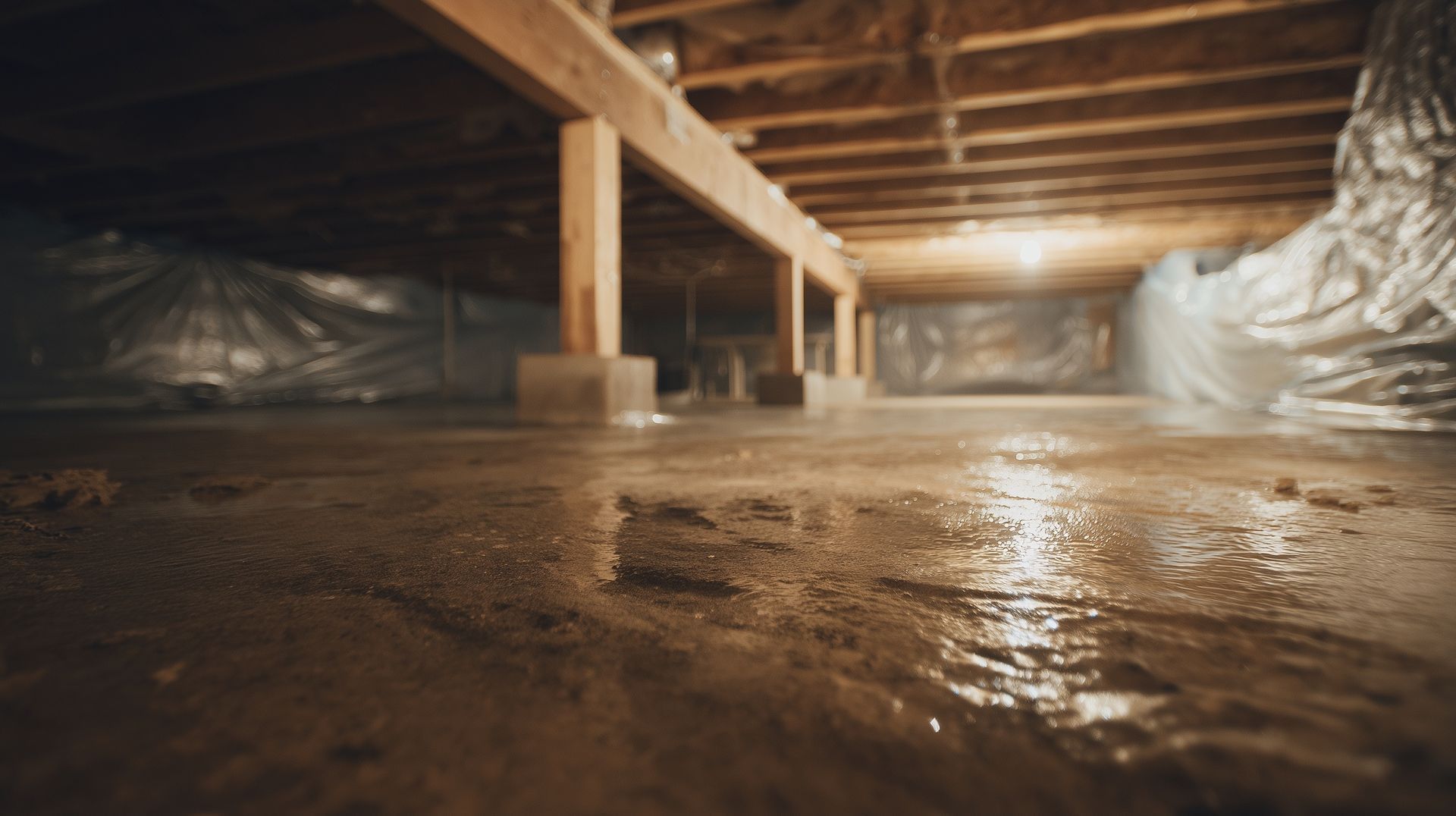
Below-grade space is the second. A basement floor sits in soil that holds moisture long after the surface has dried out, and it is the coolest surface in the house, so it collects condensation as well as vapor.
Seasonal water movement is the third. Spring runoff off the foothills, saturated soil after a wet stretch, and irrigation that runs against the foundation all raise the water table and the soil moisture immediately around a basement slab. A floor that tested comfortably in October can behave differently in May.
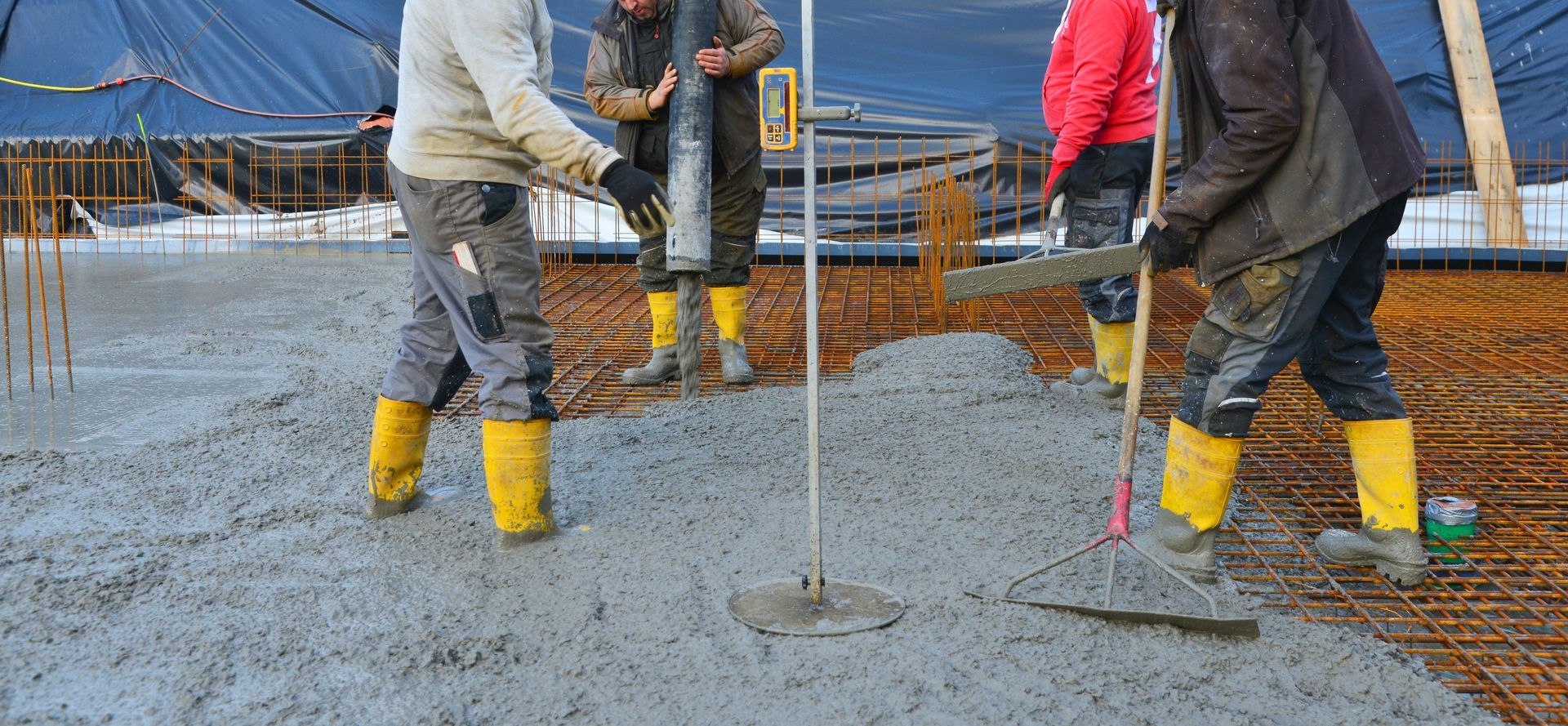
New construction is the fourth, and it catches people. Fresh concrete carries substantial mix water and needs a long drying period before it is ready for a coating. Fast track construction schedules routinely arrive at flooring before the slab has finished drying.
Drainage and grading outside the house are worth handling before anything happens inside. Downspout extensions, positive grade away from the foundation and functioning window well drainage do more for a basement slab than any coating decision.
Where testing fits in the sequence
Testing belongs before the contract is finalized, not on install morning. The results can change the system specified, the price and occasionally the decision to coat at all, and none of those conversations improve when a crew is standing in your driveway.
Crack and spall repair comes after profiling and before coating, which is a separate sequence explained in our guide to substrate repair before coating. Surface preparation itself is covered in our comparison of diamond grinding and acid etching. Moisture testing sits upstream of both, because it determines whether the rest of the plan is viable.
For basements specifically, the material case for a fast cure system is made in our post on polyurea for basement floor coatings, and the finished result, including how a light reflective floor changes a dark basement, is covered in our basement makeover guide.
Questions to ask a contractor before you sign
Ask whether the slab will be tested for moisture, and by which ASTM method. Ask who performs the test and whether the results are provided to you in writing.
Ask what limit the specified product’s data sheet states, and what happens to the price and the schedule if the slab exceeds it. Ask whether the warranty excludes moisture-related failure, because many do, and that exclusion matters far more on an untested slab. Ask how long a newly poured slab will be given to dry before coating.
A contractor who tests will answer these quickly. A contractor who does not test will change the subject to product quality.
Frequently asked questions about slab moisture
How do I know if my basement floor has a moisture problem?
Common signs include a persistent musty smell, white powdery efflorescence on the concrete, dark patches that reappear after the floor dries, curling vinyl or lifting adhesive from a previous floor covering, and any history of a coating that failed. Any one of these justifies testing before recoating.
Can you coat a basement floor that has moisture?
Sometimes, using a system rated for the measured conditions or a moisture mitigation primer designed for that purpose. The decision depends on the number the test produces and what the product data sheet permits. It should never be based on how the floor looks.
How long does a new concrete slab need to dry before coating?
Longer than most schedules allow, and the only real answer is the one the testing gives. Thickness, mix design, temperature, humidity and whether the slab can dry from one side or both all change the timeline. Test rather than count weeks.
Get the slab measured before it gets covered
Moisture is the one variable that makes an otherwise perfect installation fail, and it is entirely knowable in advance. To have your slab assessed before anyone quotes a coating for it,
request a free evaluation from Keas Concrete Coatings and we will tell you what your concrete is actually doing.